 21
212026-01-29 · Bertrand Gonthier
Euria AI: The Swiss Challenger Turning Data Center Heat Into a Competitive Advantage
Swiss cloud provider Infomaniak has quietly launched what may be the most environmentally innovative AI assistant of 2026: Euria. This privacy-first chatbot transforms its computational waste heat into residential warmth. While ChatGPT, Claude, and Gemini compete on benchmarks and model parameters, Euria is rewriting the rules of what "sustainable AI" means—and raising uncomfortable questions about whether the industry's environmental rhetoric matches reality.
The Heat Recovery Innovation: More Than Just PR
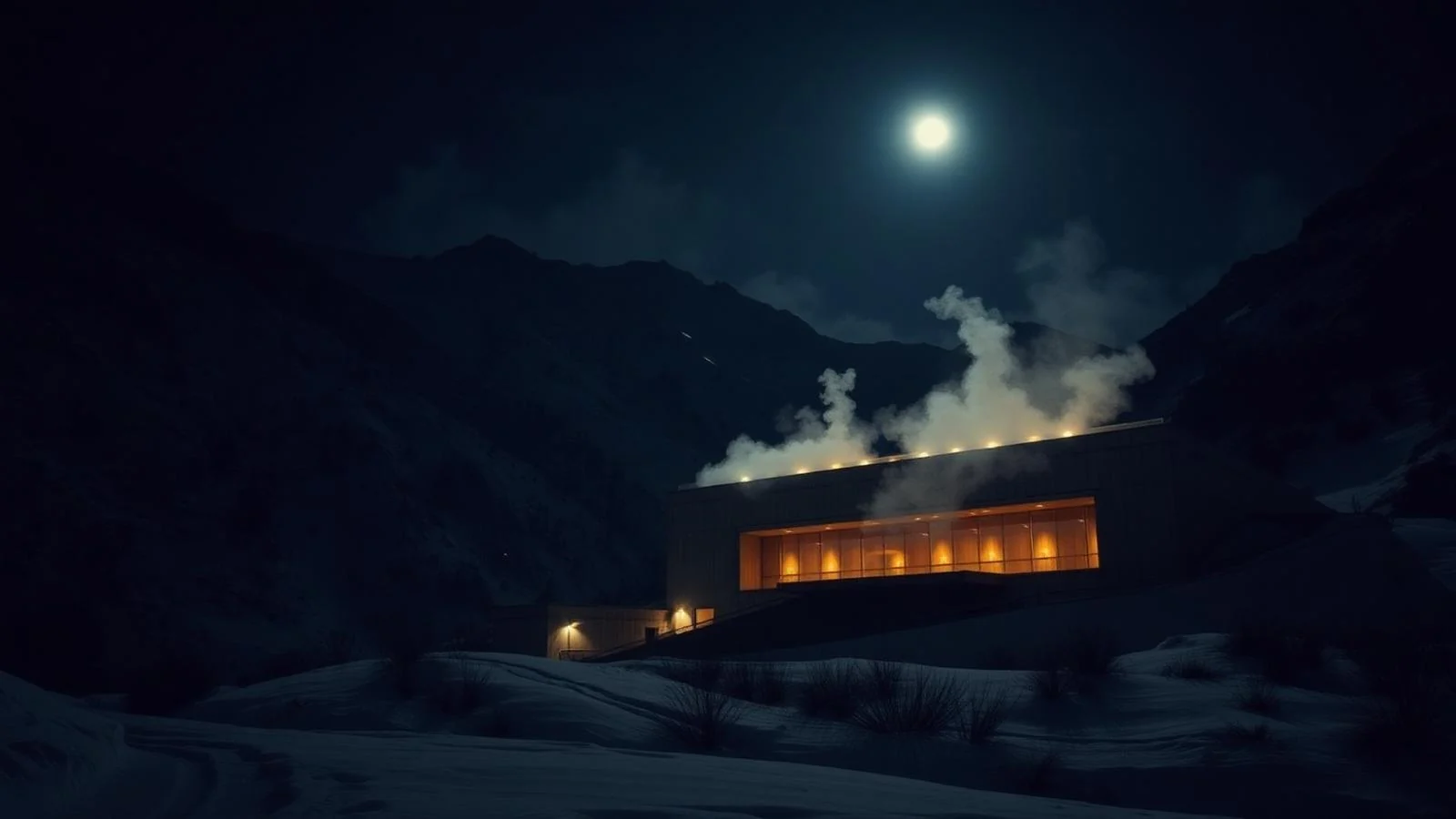
At the core of Euria's value proposition lies Infomaniak's D4 data center in Plan-les-Ouates, Geneva, inaugurated in January 2025. This underground facility achieves something unprecedented: 100% conversion of its electricity consumption into usable district heating energy. The numbers are substantial—at full capacity by 2028, the center will heat approximately 6,000 Minergie-A households year-round, equivalent to providing 20,000 people with daily five-minute showers.
The environmental impact is tangible. By feeding 1.7 megawatts of thermal energy into Geneva's district heating network, the installation prevents the annual combustion of 3,600 tonnes of CO₂-equivalent natural gas emissions—or 5,500 tonnes of wood pellet emissions—while eliminating 211 truck deliveries per year. The facility requires no water for cooling, operates entirely on renewable Swiss electricity, and sits invisibly beneath an eco-cooperative residential building with zero landscape footprint.
This isn't speculative sustainability marketing. The system has been operational since November 11, 2024, with heat continuously injected into the cantonal network at cost price. Infomaniak claims to offset 200% of its CO₂ emissions and dedicates one percent of revenue to biodiversity protection and environmental regulation advocacy.
The Nordic Precedent: A Proven Model at Scale
Euria's approach mirrors successful implementations across Northern Europe. Google's Hamina data center in Finland will supply 80% of the town's annual district heating demand when fully operational in late 2025. Microsoft's partnership with Fortum in Helsinki—described as "the world's largest data center waste heat recycling project"—is projected to provide 40% of heating for roughly 250,000 users across Espoo and Kirkkonummi. In Mäntälä, Finland, a decade-old data center already heats 2,500 homes, covering two-thirds of municipal heating needs while cutting residents' energy costs.
The European Union has institutionalized this practice through the revised Energy Efficiency Directive (2023/1791/EU), which mandates member states to establish waste heat action plans by 2030. In some EU regions, heat recovery is now a compulsory requirement for data center construction permits. Denmark reports that 63% of data centers are actively planning excess heat utilization.
The technical pathway is well-established: servers generate heat at 40-45°C, which is captured via air-to-water heat exchangers and boosted to 60-75°C using industrial heat pumps before integration into district heating networks. Optimal economics require data centers within 1-3 kilometers of heating infrastructure and return temperatures below 40°C.
Privacy Architecture: Ephemeral Mode and Swiss Data Sovereignty
Euria differentiates itself through aggressive privacy commitments that stand in stark contrast to industry norms. All request processing, storage, and hosting occur exclusively within Infomaniak's Swiss data centers with no external service providers or cross-border data transfers. Conversations are encrypted end-to-end at all stages, and critically, no user data is employed to train AI models, build profiles, or feed third-party systems.
The centrepiece is rehemeral Mode, which delivers what Infomaniak terms "absolute confidentiality": exchanges are never stored, leave no server trace, and cannot be retrieved by any means—including by Infomaniak itself. This zero-retention option targets sensitive sectors such as healthcare, education, law, finance, and public administration, with full compliance to GDPR and Switzerland's Federal Act on Data Protection (FADP).
How This Compares to the Market Leaders
The privacy landscape among mainstream AI assistants has deteriorated markedly in 2025-2026.
ChatGPT (OpenAI) collects comprehensive metadata, including all text prompts, geolocation data, commercial transaction history, contact details, device cookies, log data, and account information. While OpenAI does not sell user data to third parties, conversations are used to train large language models unless users explicitly opt out. Even with chat history disabled, conversations are retained for 30 days for abuse monitoring. The Dutch Data Protection Authority ruled in 2025 that ChatGPT's models cannot easily "unlearn" specific facts, creating conflict with GDPR's Right to Rectification. ChatGPT generates approximately 4.32 grams of CO₂ per query, accumulating to over 260,000 kilograms monthly—equivalent to 260 transatlantic flights between New York and London.
Claude (Anthropic) executed a dramatic policy reversal in September 2025, shifting from opt-in to opt-out for data training. Free, Pro, and Max users now have their conversations used for model training by default unless they manually disable the setting, though Commercial, Enterprise, and Team accounts remain exempt. More striking is the data retention change: Anthropic extended its retention period from 30 days to five years—a 6,000% increase—regardless of whether users permit training on their conversations. Even with opt-out, data is still held for 30 days. Claude queries emit approximately 3.2 grams of CO₂. Despite these policy shifts, Anthropic maintains Constitutional AI principles designed to protect privacy and filters sensitive data before training.
Gemini (Google) stores conversation data for 18 months by default, adjustable to 3 or 36 months. Even with activity tracking disabled, Gemini conversations are saved for up to 72 hours for safety and security purposes. Human annotators routinely read, label, and process Gemini conversations—albeit "disconnected" from user accounts—to improve the service, retaining them for up to three years along with languages, devices, and location data. Google has made efficiency gains, reducing per-query energy consumption by 33× and carbon footprint by 44× over 12 months, achieving approximately 1.6 grams of CO₂ per query and 0.24 watt-hours per text prompt—comparable to one second of microwave use.
The Privacy Divide
Euria's privacy posture is unambiguous: zero training use, zero third-party sharing, and optional zero retention. The mainstream alternatives offer varying degrees of control, but all retain data for weeks to years and leverage it for model improvement by default.
Environmental Context: The AI Industry's Growing Energy Crisis
To understand Euria's significance, consider the industry backdrop. Global data center electricity consumption reached approximately 415 terawatt-hours (TWh) in 2024—about 1.5% of global electricity demand—and is projected to climb to 945 TWh by 2030, approaching 3% of global consumption. In the United States alone, data centers consumed 4.4% of total electricity in 2024, with AI-specific servers using an estimated 53-76 TWh, expected to surge to 165-326 TWh by 2028.
AI workloads consume 7-8 times more energy than typical computing tasks. Training GPT-3 alone required an estimated 1,287 megawatt-hours and generated approximately 552 tons of CO₂. The International Energy Agency forecasts that by 2026, data center electricity consumption could exceed 1,000 TWh—roughly equivalent to Japan's entire national electricity usage. A Google search enriched with full AI integration could increase electricity demand tenfold, from 0.3 watt-hours per query to 2.9 watt-hours, potentially adding 10 TWh annually for Google alone at current query volumes.
The water footprint is equally alarming. Training ChatGPT reportedly consumed enough water to manufacture 370 BMWs or 320 Teslas, with global AI-related water demand projected to reach 4.2-6.6 billion cubic meters by 2027—exceeding Denmark's annual water consumption.
Critically, data centers operate continuously and cannot rely solely on intermittent renewable sources like wind or solar. A Harvard T.H. Chan School of Public Health study found that the carbon intensity of electricity consumed by data centers is 48% higher than the U.S. average, partly due to concentration in regions with coal-heavy grids such as Virginia, West Virginia, and Pennsylvania. While tech giants have pledged to triple global nuclear capacity by 2050, nuclear currently supplies only 20% of U.S. electricity, and new facilities will require decades to construct.
Euria's Carbon Advantage
Euria operates on 100% local Swiss renewable electricity with no water cooling requirements. By recovering all waste heat for productive use, the system achieves near-zero energy waste—a stark contrast to the 40-100% energy overhead typical of conventional data centers, where cooling and infrastructure consume substantial additional power beyond computing loads. Infomaniak is constructing its own solar power plants with a goal to generate 50% of total electricity consumption by 2030.
The efficiency difference is structural. While Gemini has made impressive per-query carbon reductions and ChatGPT optimizations with modern hardware can reach 0.3-1.0 grams CO₂ per query, these figures exclude infrastructure overhead, embodied carbon from hardware manufacturing (20-30% of annual operational emissions), and the reality that most AI infrastructure remains dependent on fossil-fuel-heavy grids.
Euria's model eliminates thermal waste entirely. Rather than dissipating server heat into the atmosphere or bodies of water—standard practice globally—every joule is captured and repurposed for human welfare. This closed-loop architecture represents a fundamental systems rethink, not incremental optimization.
Technical Capabilities and Model Foundation
Euria supports text and voice input, performs web searches (intelligently triggered only when contextually relevant to conserve energy), analyzes documents in PDF, Word, and Excel formats, transcribes audio files across multiple formats (.mp3, .m4a, .wav, .aac, .mp4), interprets images, and provides translation, summarization, and text correction. It is accessible without account creation via web interface (euria.infomaniak.com) and mobile applications for Android and iOS.
The underlying models are based on Qwen, a family of open-source large language models developed by Alibaba Cloud. Specifically, Euria appears to utilize variants from the Qwen2.5 and Qwen3 series, which include dense models ranging from 2 to 72 billion parameters and mixture-of-experts (MoE) architectures such as Qwen3-235B-A22B (235 billion total parameters with 22 billion activated) and specialized variants like Qwen3-Coder for programming tasks. These models support up to 256,000-token context windows, multilingual capabilities across 100+ languages, and advanced reasoning, coding, and multimodal processing.
The choice of Qwen has drawn scrutiny. One Reddit user noted disappointment that Euria relies on a Chinese-developed model despite the platform's emphasis on digital sovereignty. This tension—between European data governance and non-European model architecture—highlights a critical gap: Europe remains dependent on AI models primarily developed in the United States and China. As Infomaniak CEO Marc Oehler stated, "Europe must invest to catch up and develop its own sovereign, ethical, and carbon-neutral AI models. The more users support local providers, the better equipped we will be to achieve technological independence".
Competitive Positioning: Strengths and Limitations
Euria enters a market dominated by technologically mature competitors. As of January 2026, the AI leaderboard rankings place Google Gemini 3 Pro first (1,524 score), followed by Anthropic Claude Opus 4.5 (1,521), and OpenAI GPT-5.2 (1,403). Comparative analyses indicate:
ChatGPT excels in creative tasks, idea generation, storytelling flair, and quick impressive results, especially with specific constraints.
Claude leads in structured planning, conversational nuance, ethical reasoning, and natural-sounding output, though can be overly verbose.
Gemini dominates for factual accuracy, contextual understanding, coding, cultural nuance, and conciseness, particularly in tasks requiring deep contextual understanding.
Euria lacks published benchmark comparisons on these standard evaluation metrics. Its performance relative to frontier models like GPT-5, Claude 4, or Gemini 3 Pro remains unverified. For users prioritizing cutting-edge reasoning capabilities, multimodal sophistication, or specialized coding assistance, the leading proprietary models likely maintain technical advantages.
However, Euria's competitive proposition is not performance parity—it is privacy integrity, environmental responsibility, and digital sovereignty as first-order design principles rather than afterthoughts. For users in regulated industries, European entities concerned with GDPR compliance, or those philosophically opposed to surveillance-capitalism business models, these attributes may outweigh marginal performance differentials on academic benchmarks.
Pricing and Accessibility
Euria is entirely free without usage caps for basic features, accessible without account creation. A free myKSuite account (requiring only an email address) provides 35 GB of storage and extended capabilities. Paid tiers integrate Euria into Infomaniak's business ecosystem: myKSuite+ (€19/CHF 19 annually) offers 1 terabyte storage and AI-driven email management, while kSuite Pro (€2,280/CHF 2,280 per user annually) includes instant messaging, cloud storage, email, calendar, contacts, and videoconferencing alongside Euria access.
By contrast, ChatGPT charges $20 monthly for Plus (with extended GPT-5 access, image generation, and priority responses) and $200 monthly for Pro with unlimited o1 reasoning mode. Claude and Gemini offer similar tiered pricing structures with free plans carrying strict message limits and restricted model access.
The Uncomfortable Question: Can AI Ever Truly Be Sustainable?
Euria's heat recovery system and renewable energy sourcing represent genuine engineering achievements. Yet they also spotlight the industry's broader contradictions. If waste heat reuse is technically feasible, operationally proven across Northern Europe, and economically viable enough that some EU regions mandate it for construction approval, why does it remain the exception rather than the standard?
The answer lies in regulatory gaps, misaligned incentives, and the absence of lifecycle accountability. Most jurisdictions do not price negative environmental externalities into electricity costs, creating no market penalty for thermal waste. Data centers cluster in regions offering tax incentives and cheap electricity—often coal- or gas-generated—regardless of environmental consequences. The industry's voluntary commitments to renewable energy purchasing agreements (PPAs) often involve accounting maneuvers where companies claim credit for renewable energy generated elsewhere on the grid, rather than directly powering their facilities.
Google's 33× efficiency gain for Gemini queries over 12 months demonstrates that technological progress is possible—but it also reveals how profoundly inefficient these systems were initially. The question is not whether AI can be made more sustainable; it is whether market forces and regulatory structures will require it before scale overwhelms incremental efficiency gains. The rebound effect looms large: as AI becomes cheaper and more efficient, usage explodes, and aggregate consumption rises despite per-query improvements.
Euria's model proves that zero-waste AI infrastructure is achievable today. The uncomfortable implication is that competitors choosing not to implement similar systems are making business decisions that externalize environmental costs onto society.
Here's the controversial question for the LinkedIn community: If a Swiss cloud provider with a fraction of Big Tech's resources can achieve 100% waste heat recovery and zero-retention privacy—should data center heat reuse become legally mandatory for any AI facility above 1 megawatt, and should companies that fail to implement it be prohibited from marketing their products as "sustainable" or "responsible AI"? Or would such regulation stifle innovation and impose unrealistic constraints on a rapidly evolving industry?
What do you think? Would you switch to a privacy-first, heat-recycling AI like Euria if performance was comparable to ChatGPT or Claude—or do market-leading capabilities always justify environmental trade-offs?
One quiet dispatch a month — new work, applied AI notes, no noise.
Have a workflow to fix?
A senior implementation lead replies within 24 h.